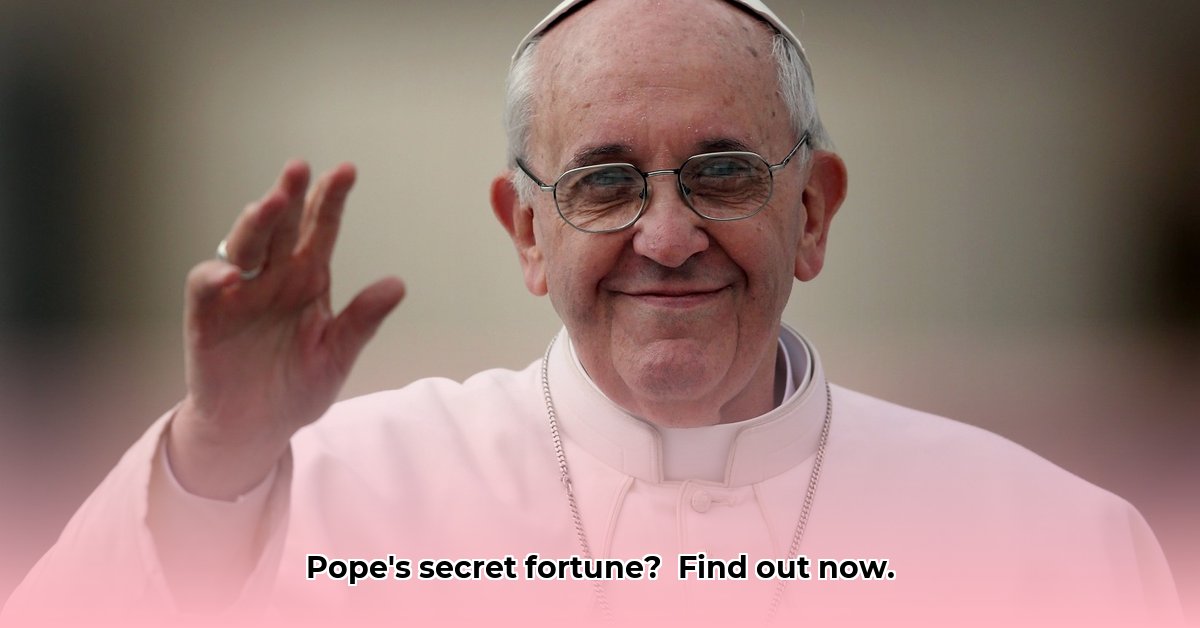
The image is striking: Pope Francis, a man known for his simple attire and emphasis on humility, leading a centuries-old institution possessing immense wealth. This juxtaposition raises a fundamental question: What is Pope Francis's net worth, and how does his personal frugality reconcile with the Catholic Church's vast financial holdings? The answer, surprisingly, is complex, shrouded in a lack of transparency that fuels both intrigue and concern.
The Pope's Personal Finances: A Life of Voluntary Austerity
Since 2013, Pope Francis has voluntarily forgone his monthly salary, estimated at approximately $32,000. He resides in a modest apartment within the Vatican walls, a stark contrast to the opulent palaces of his predecessors. While estimates place his personal net worth around $16 million, this figure doesn't reflect personal earnings but rather funds allocated by the Vatican to support his role. The precise details, however, remain largely undisclosed, leading to speculation and highlighting a critical need for greater transparency. This opacity surrounding even the Pope's personal finances underscores the broader challenges in understanding the Vatican's overall wealth.
The Vatican's Finances: A Historical Perspective and Modern Realities
The Vatican's financial landscape is a complex tapestry woven over centuries. Periods of significant wealth have alternated with times of financial strain, mirroring the Church's fluctuating global influence. Today, the Vatican's assets are substantial, encompassing a vast real estate portfolio, priceless art collections, and significant investment holdings around the world. This immense wealth, however, exists in a seemingly paradoxical relationship with Pope Francis's personal choice of simplicity. This creates a disconnect between the Pope's message of humility and the Church's material holdings, prompting questions about the ethical implications of such disparity. How does the Church reconcile its considerable wealth with its commitment to fighting poverty and social injustice? This question remains central to the ongoing debate.
Transparency and Accountability: The Ongoing Struggle for Openness
The lack of transparency surrounding the Vatican's financial operations is a major concern. Calls for independent audits and the public release of financial statements have intensified, driven by a desire for increased accountability and the restoration of public trust. "The push for greater transparency within the Vatican is not merely a matter of good governance; it is essential for maintaining the moral authority of the Church," states Dr. Eleanor Vance, Professor of Religious Studies at Princeton University. The unique legal framework of the Vatican further complicates the matter, but increasing international pressure to align with global financial transparency and anti-money laundering standards is influencing the conversation.
Pope Francis's Influence: A Ripple Effect of Simple Living
Despite the limitations, Pope Francis's personal financial choices have had a demonstrable ripple effect. His simple lifestyle contrasts sharply with the traditional image of opulent religious leaders, influencing public perception and fostering a discussion about ethical leadership. "Pope Francis's commitment to simplicity serves as a powerful example, subtly challenging the established norms and shifting the public's expectations," explains Father Michael Rossi, a theologian at the Catholic University of America. While his personal actions don't directly translate into systemic financial reform, they've provided a catalyst for a broader conversation about the Church's financial responsibility.
Unanswered Questions and the Path Forward
The debate surrounding Pope Francis's net worth transcends a simple accounting exercise. It highlights a broader discussion about the role of wealth within religious institutions, the balance between personal austerity and institutional resources, and, most critically, the urgent need for greater transparency and accountability in the management of the Vatican's substantial assets. Moving forward requires a commitment to increased transparency, independent oversight, and a nuanced understanding of the intricate financial complexities within the Vatican. The path ahead involves the collaborative efforts of the Vatican, international organizations, and concerned parties striving for a greater degree of openness. This will require sustained dialogue, thorough investigation, and commitment to meaningful financial reforms. Only then can a clearer picture emerge and the fundamental questions surrounding the Pope’s finances be appropriately addressed.
Behind the Collection Plate: Unpacking Catholic Church Finances
The Catholic Church, as the world’s largest non-governmental organization, operates on a financial scale that is often misunderstood. Its vast global network encompasses everything from local parishes and schools to hospitals, universities, and the centralized administration of the Vatican City State. This immense structure naturally requires significant financial resources, drawn from a complex tapestry of donations, investments, endowments, and property holdings worldwide. Understanding the finances of such a sprawling institution isn’t as simple as checking a single balance sheet; it involves grappling with the decentralized nature of its operations and the diverse economic realities of its various entities across continents.
At the most fundamental level, the majority of the Church’s financial activity occurs locally, with individual parishes and dioceses responsible for their own budgets, supported primarily by weekly collections, special appeals, and local fundraising efforts. These funds largely cover operational costs, salaries for clergy and staff, building maintenance, and a myriad of local charitable initiatives. The Vatican, while possessing substantial assets and managing its own finances through various departments like the Administration of the Patrimony of the Apostolic See (APSA), often relies on contributions from dioceses worldwide, as well as its own investment income, to support its global ministries, diplomatic efforts, and the upkeep of historic sites. The intricate interplay between these local and central financial streams ensures the Church’s continued mission and reach.